
Security Researcher
Heitor Gouvêa
The discussion about SBOM (Software Bill of Materials) has ceased to be a peripheral topic in security and has become central to modern software engineering. The growing complexity of systems, primarily composed of open source dependencies and third-party artifacts, has made it unfeasible to maintain security without structural visibility. SBOM emerges precisely as this layer of formalized visibility.
What is SBOM
SBOM is not just a list of dependencies. Technically, it is a structured document that describes the composition of a software artifact, including sufficient metadata for the unambiguous identification of each component. This involves name, version, license, vendor, cryptographic hashes, dependency relationships, and ideally, standardized identifiers like PURL (Package URL) or CPE.
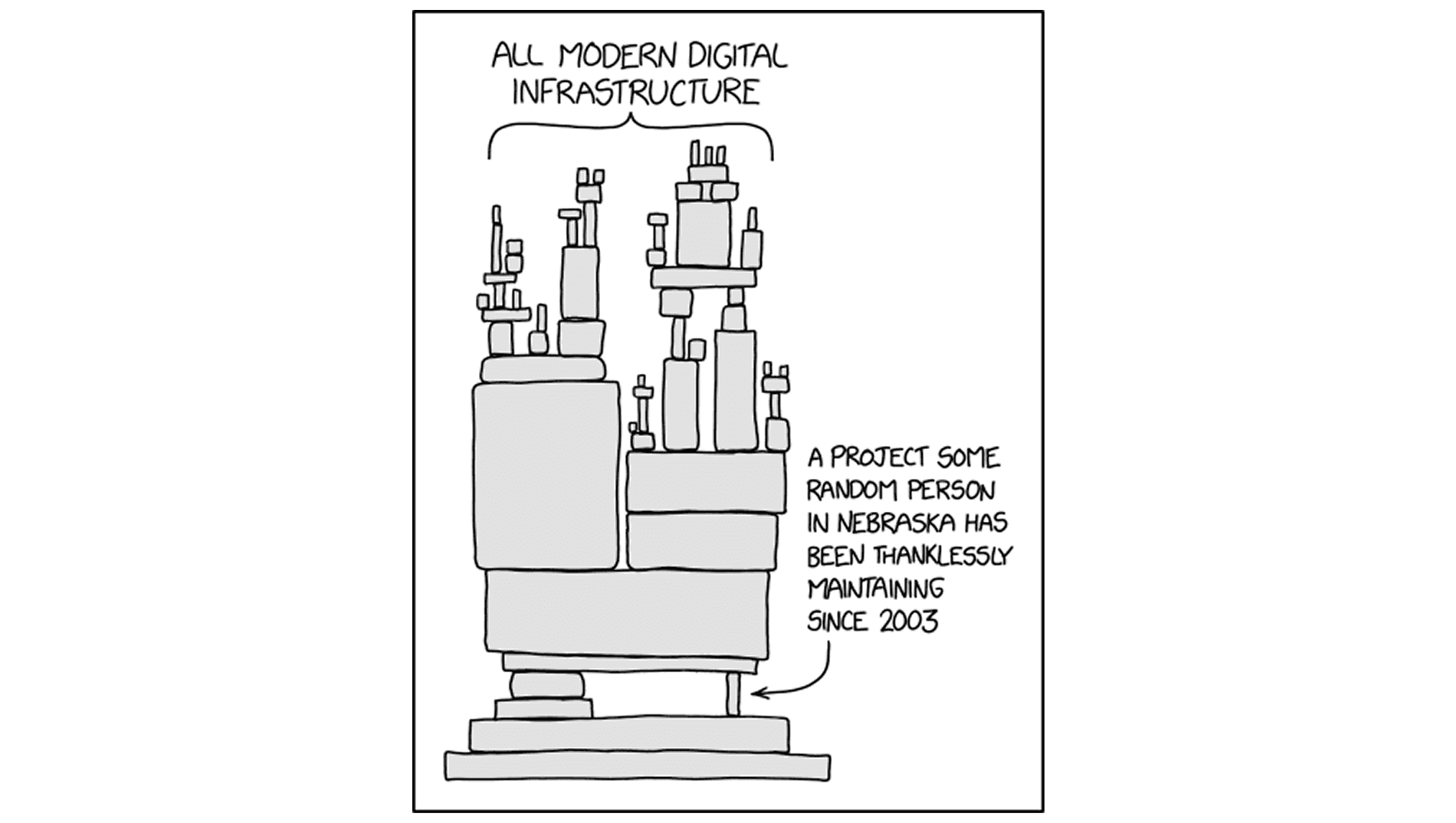
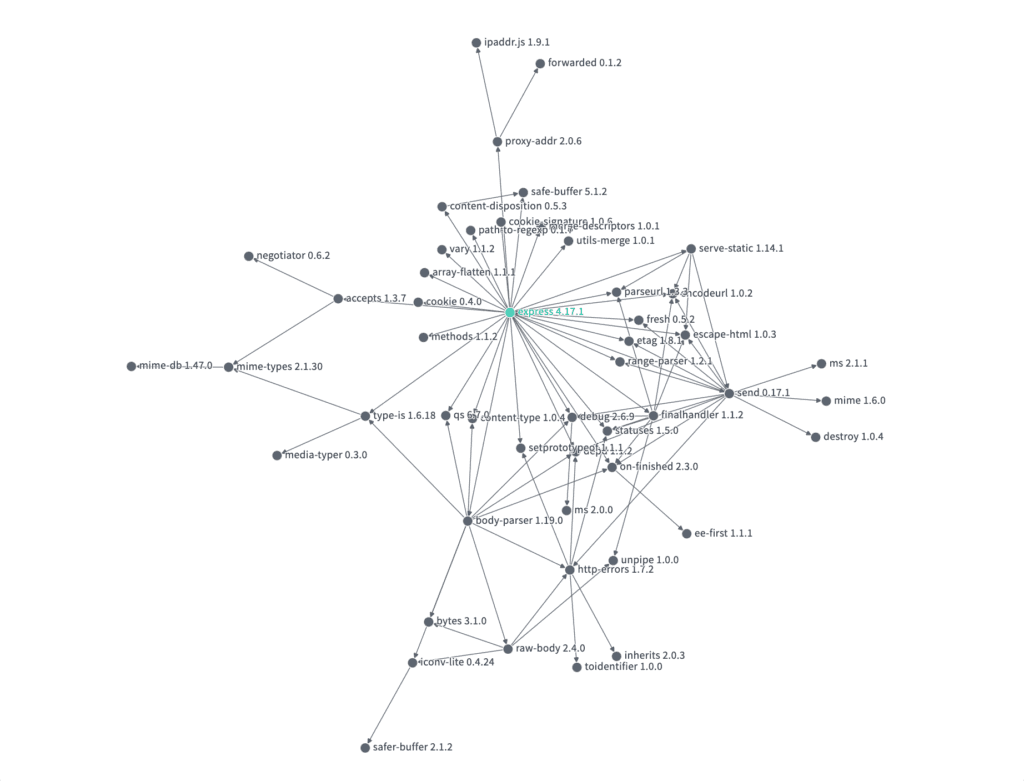
The two predominant formats are SPDX [1] and CycloneDX [2]. The former emerged in the context of license compliance, while the latter was designed with a more explicit focus on application security. Both have evolved to support complex modeling of dependencies, hierarchical relationships, digital signatures, and extensions for vulnerability data. Formally, an SBOM file is a directed graph of components, where nodes represent packages and edges represent dependency relationships. This modeling allows for automated reasoning about impact, risk inheritance, and transitive analysis.
Why SBOM is Structural for Security
The main reason SBOM has become critical lies in the asymmetry between consumption and control. Organizations consume thousands of dependencies without governance. When an incident like Log4Shell occurs, the relevant question is not "do we have a scanner?", but rather "do we know exactly where this library is being used?" Without SBOM, the answer depends on manual searches and inspections or late reconstruction of the build. With SBOM, the organization has a verifiable inventory that can be cross-referenced with vulnerability databases.
In the context of component-based vulnerability management, SBOM is the primary data layer. The modern process no longer starts with isolated scanning, but rather with the correlation between structured inventory and vulnerability intelligence (NVD, OSV, GHSA). This reduces noise, improves traceability, and allows for continuous reprocessing without the need for a new complete scan of the artifact.
In mature environments, SBOM is generated at the time of the build and stored as a versioned artifact. With each update in vulnerability databases, the inventory can be reevaluated without recompiling the software. This model is significantly more efficient and aligned with DevSecOps practices.
SBOM as a Supply Chain Security Element
In the context of software supply chain security, SBOM plays a role similar to that of a cryptographic manifest. It provides traceability over what has been effectively included in the build. When combined with a digital signature (for example, using cosign) and frameworks like SLSA (in future publications we will write about this topic), SBOM helps to ensure integrity and provenance. It is important to understand that SBOM is not a vulnerability scanner. It does not identify flaws on its own. It provides the necessary inventory for scanners and risk engines to operate accurately.
Tools for SBOM Generation
Various tools implement SBOM generation with different analysis strategies. Here at Quor, we primarily use Syft, but in addition, the following stand out:
Trivy from Aqua Security, which combines SBOM generation and vulnerability scanning;
CycloneDX CLI, maintained by OWASP;
SPDX tools, associated with the Linux Foundation;
tern, focused on container analysis;
cdxgen, targeting multiple application ecosystems.
Each tool has trade-offs in terms of analysis depth, ecosystem support, CI/CD integration, and data model. For this article, the focus will be on Syft due to its technical robustness, modular architecture, and wide adoption in cloud-native environments.

Quor Newsletter
Syft
Developed by Anchore, it is a tool for generating SBOM that operates through static analysis of artifacts. Its operation is based on "catalogers", modules responsible for identifying packages within different formats of filesystem or container images. Architecturally, Syft performs:
Extraction of the image's filesystem (when applicable);
Identification of package manifests (package-lock.json, pom.xml, go.mod, etc.);
Correlation with internal databases of patterns for version inference;
Normalization of components to an internal model;
Serialization to formats such as SPDX or CycloneDX;
A relevant technical characteristic is native support for PURL. This reduces ambiguities in the subsequent correlation step with vulnerabilities.
Practical example with Syft
The generation of SBOM from an image is straightforward:
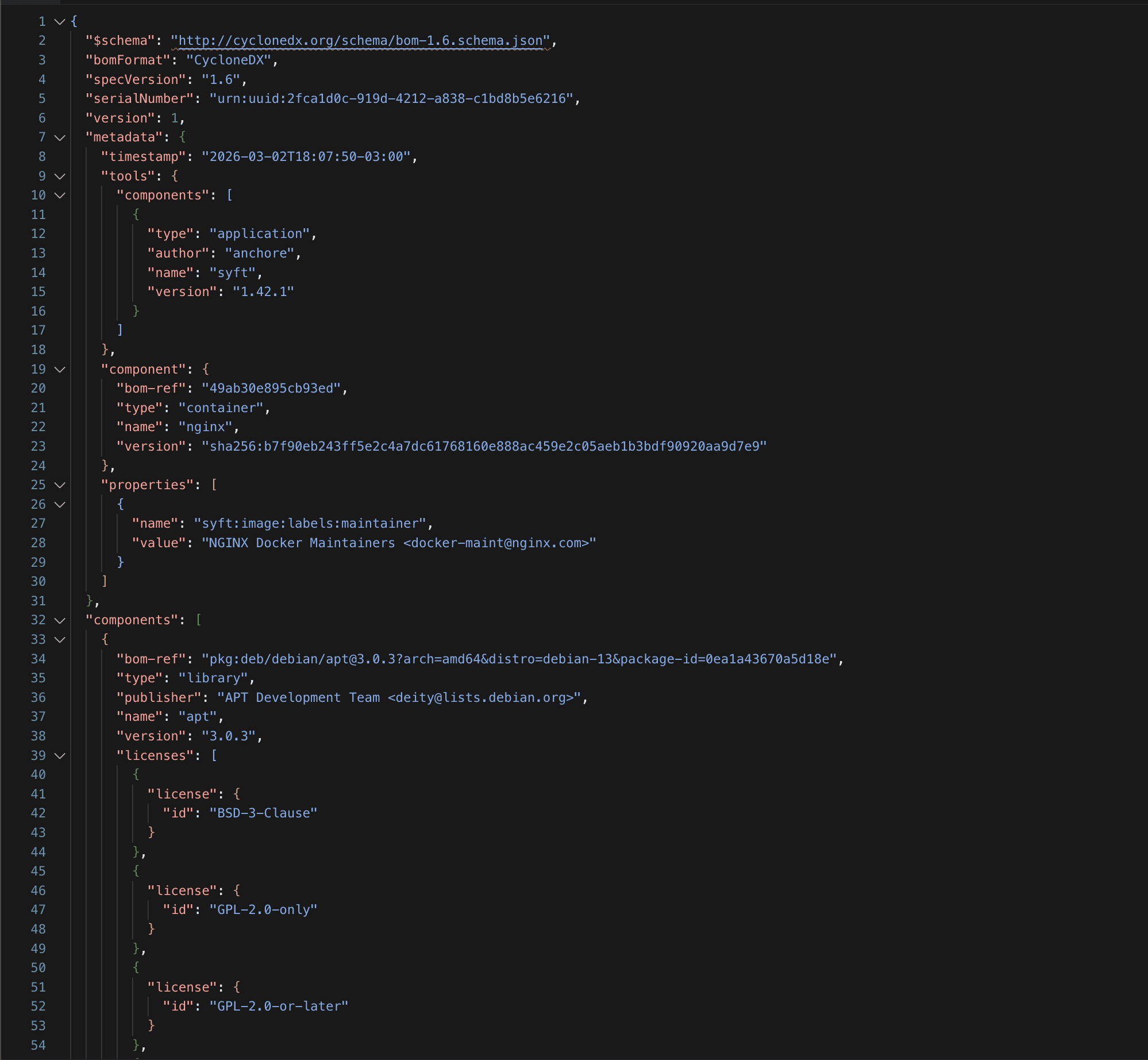
$ syft nginx:latest -o cyclonedx-json > sbom.json

Internally, Syft downloads the image (if necessary), unpacks its layers, and analyzes each filesystem layer. It identifies both operating system packages (for example, dpkg or rpm) and application dependencies. The result in CycloneDX includes:
Components;
Hashes;
Dependency relationships;
Build metadata;
Type of component (library, application, framework).
For further analysis, the SBOM can be used by tools like Grype (also from Anchore) or Trivy (from Aqua Security) to correlate with CVE databases. For visualization purposes, options include Sunshine and SBOMPlay.
SBOM in vulnerability management
It is technically more efficient to scan the SBOM of the image than the image itself (OCI/Docker), especially from the perspective of computational cost, latency, and I/O consumption. When analyzing the image directly (for example, with: $ grype image:1.0), the scanner needs to download or access layers, reconstruct the filesystem and index artifacts before correlating them with vulnerability databases. In the SBOM-based model, as in: $ grype sbom:path/to/sbom.json, this extraction step is eliminated, as the enumeration of packages and dependencies is already pre-materialized in a structured format (CycloneDX or SPDX), drastically reducing processing overhead. This approach is applicable to tools like Grype and Trivy, which support direct ingestion of SBOM, and aligns with modern DevSecOps strategies. Thus, in addition to optimizing resources, scanning SBOM favors reproducibility, decoupling between build and vulnerability analysis and better scalability in environments with a large volume of images.
A more technical point is transitive analysis: a vulnerability may exist in an indirect dependency that does not explicitly appear in the main project file. SBOM resolves this by modeling the full dependency graph. In corporate environments, mature architecture involves:
Generating SBOM in the pipeline;
Digital signature of the SBOM;
Storage in a central repository;
Continuous reevaluation against updated feeds;
Prioritization based on contextual risk (asset criticality, exposure, exploitability);
This approach shifts security from a periodic scanning model to a model oriented toward permanent inventory.
Limitations, scope, and evolution of the concept
A recurring confusion is treating SBOM as if it were a complete representation of the software itself. It is not. SBOM describes embedded components in the artifact, especially third-party dependencies, open-source libraries, operating system packages, and frameworks. It does not describe proprietary code developed internally by the organization, nor does it model business logic, execution flows, or vulnerabilities introduced in authored code. Formally, SBOM is an inventory of third-party composition. The idea is to answer the question:
"What external blocks make up this software?"
Not to answer:
"Does this software have logic flaws or vulnerabilities in the internally developed code?"
This point is crucial because vulnerability management based on SBOM is primarily focused on inherited risk via dependencies. Vulnerabilities in proprietary code require different practices, such as SAST, DAST, manual code analysis, and threat modeling.
Another structural limitation is that SBOM represents a state of the artifact at the time of generation. It does not capture dynamic behavior, late loading of libraries, external plugins, or dependencies resolved at runtime outside the analyzed environment. Additionally, SBOM is not a mechanism for cryptographic assessment. It may include integrity hashes, but does not itself attest to the authenticity or provenance of the build. For that, it is necessary to combine it with digital signature and supply chain verification mechanisms.
If SBOM represents the static composition of the artifact, RBOM (Runtime Bill of Materials) describes the components effectively loaded and used at runtime. This distinction is relevant because not every component present in the build is necessarily loaded at runtime. On the other hand, systems may dynamically load additional modules. It reduces noise by identifying what is actually active in production, allowing prioritization of vulnerabilities based on real exposure.
Cryptography and SBOM signing
For SBOM to be trustworthy in complex supply chains, it needs to be protected against tampering. This introduces the topic of:
Digital signature of SBOM;
Linking the SBOM to the artifact via hash;
Immutable storage.
Without a signature, SBOM is just a declarative document. With the signature, it integrates into a model of attestation. This is a point often overlooked: SBOM increases visibility, but only combined with guarantees of integrity does it effectively strengthen the chain of trust.
Conclusion
SBOM should be understood as a structured mechanism for visibility of components, not as a universal security solution. It does not replace source code analysis, does not fix architectural flaws, and does not eliminate the need for additional controls throughout the software lifecycle. Its value lies in the ability to model the composition of software in a standardized, verifiable, and machine-processable way, turning dependencies that are often invisible into explicit and auditable data.
When integrated with complementary practices, such as cryptographic signing to ensure integrity and provenance, specific inventories for cryptography (CBOM), analysis of components effectively loaded at runtime (RBOM), and prioritization engines based on contextual risk, SBOM moves from mere documentation to being part of a broader architecture of evidence-based software security.
In this sense, SBOM represents a structural shift in how we treat security. Instead of concentrating efforts solely on inspecting the final binary, we begin to consider composition as primary security data. Visibility precedes detection. Tools like Syft enable this practice at scale, integrating inventory generation into the build pipeline itself. When this inventory is incorporated into a continuous flow of vulnerability management, with periodic reevaluation against updated databases and prioritization criteria based on real impact, the organization significantly reduces the time to respond to incidents, increases accuracy in identifying exposure, and concretely strengthens the security of the software supply chain.
References
With Quor, security becomes your competitive edge. See how in a personalized demo.